

Language: Spanish
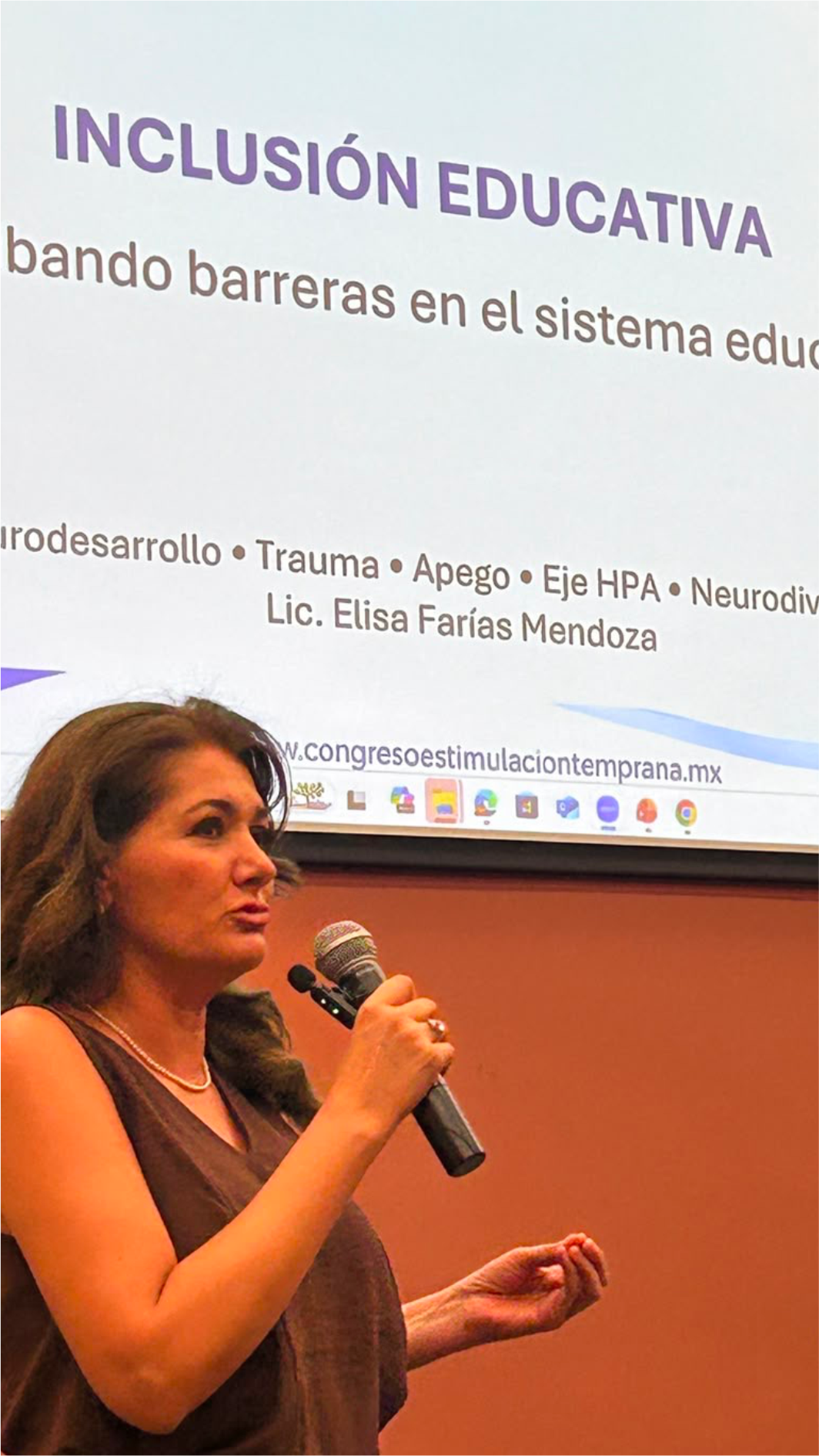
Psychoeducator, speaker, and consultant in neurodiversity, educational inclusion, and employability. Elisa Farías Mendoza is a consultant specializing in neurodiversity, inclusion, education, and employability, with a background in outreach, awareness-raising, training, and the development of socially impactful projects. In 2015, she finally received a late diagnosis of ADHD and twice-exceptionality (ADHD + High Abilities). Her own life experience and training process led her to transform her search for answers about her neurodivergence into a platform for outreach, advocacy, and social transformation.
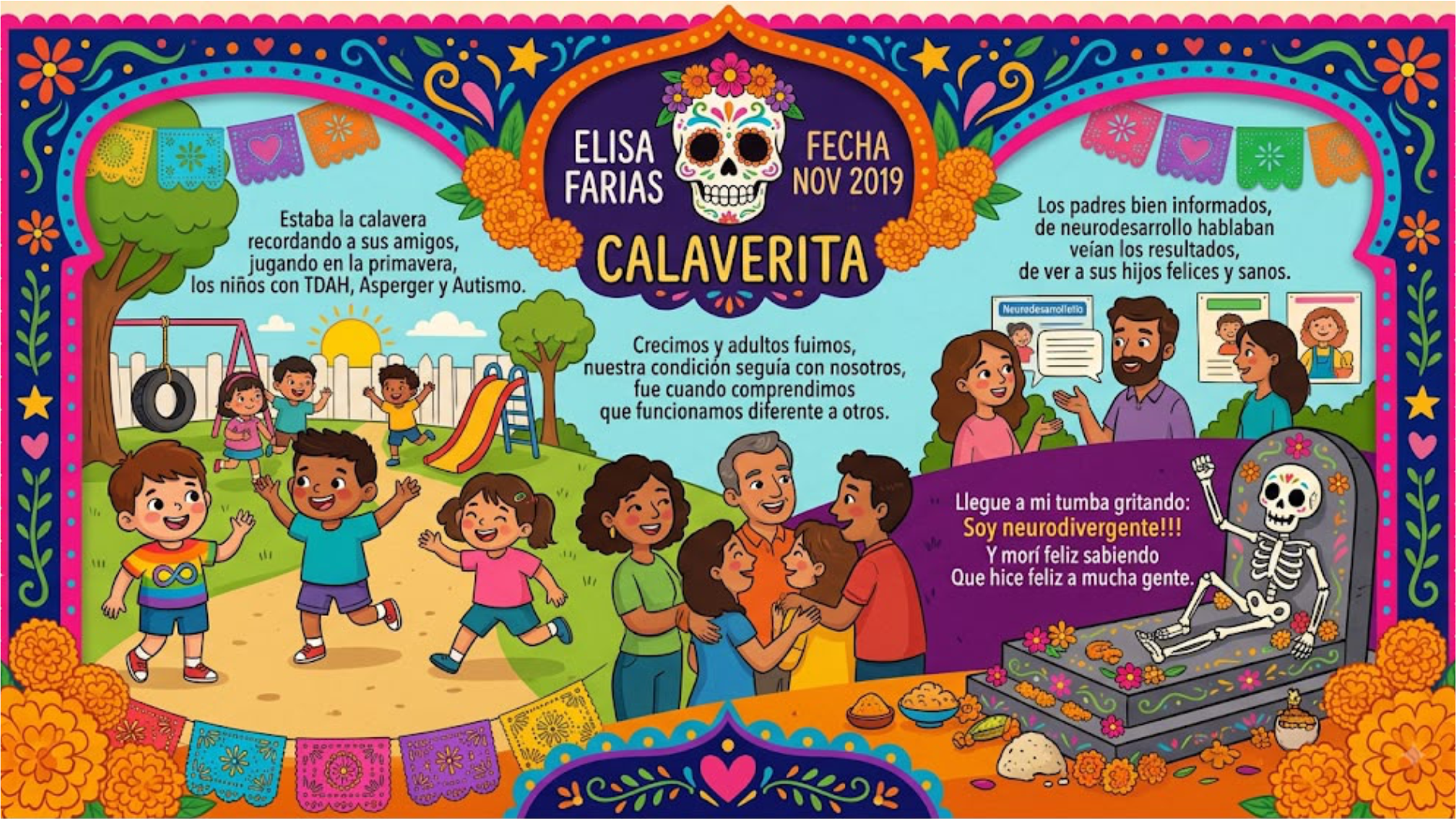
She is the founder of Fundación Mente Neurodivergente A.C. (Neurodivergent Mind Foundation) and the creator of “Hablemos de Neurodesarrollo” (Let’s Talk About Neurodevelopment), an outreach project that began on March 8, 2019, and later evolved into DNA Talent Consultoría (DNA Talent Consulting), expanding her work to include university education, workplace inclusion, neurodivergent employability, and business certification. Since January 2019, she has collaborated with the Spanish ADHD Network (RED TDAH España), participating in the creation and dissemination of content related to neurodevelopment.
In 2023, she was the only Mexican invited to the First Congress on Employability and Neurodiversity in Valencia, Spain, solidifying her participation in international forums specializing in workplace inclusion.
She has collaborated in the process of drafting the upcoming reform to the Federal Law on Autism in Mexico and has participated in national awareness-raising, legislative dialogue, and academic training initiatives related to neurodiversity, inclusion, and human rights, including the Senate and the Chamber of Deputies.
Since November 2022, she has collaborated with CIMMCO, a center directed by neuroscientist Jorge Bosh Boyard, PhD, strengthening the interdisciplinary integration of neuroscience, behavior, and education.
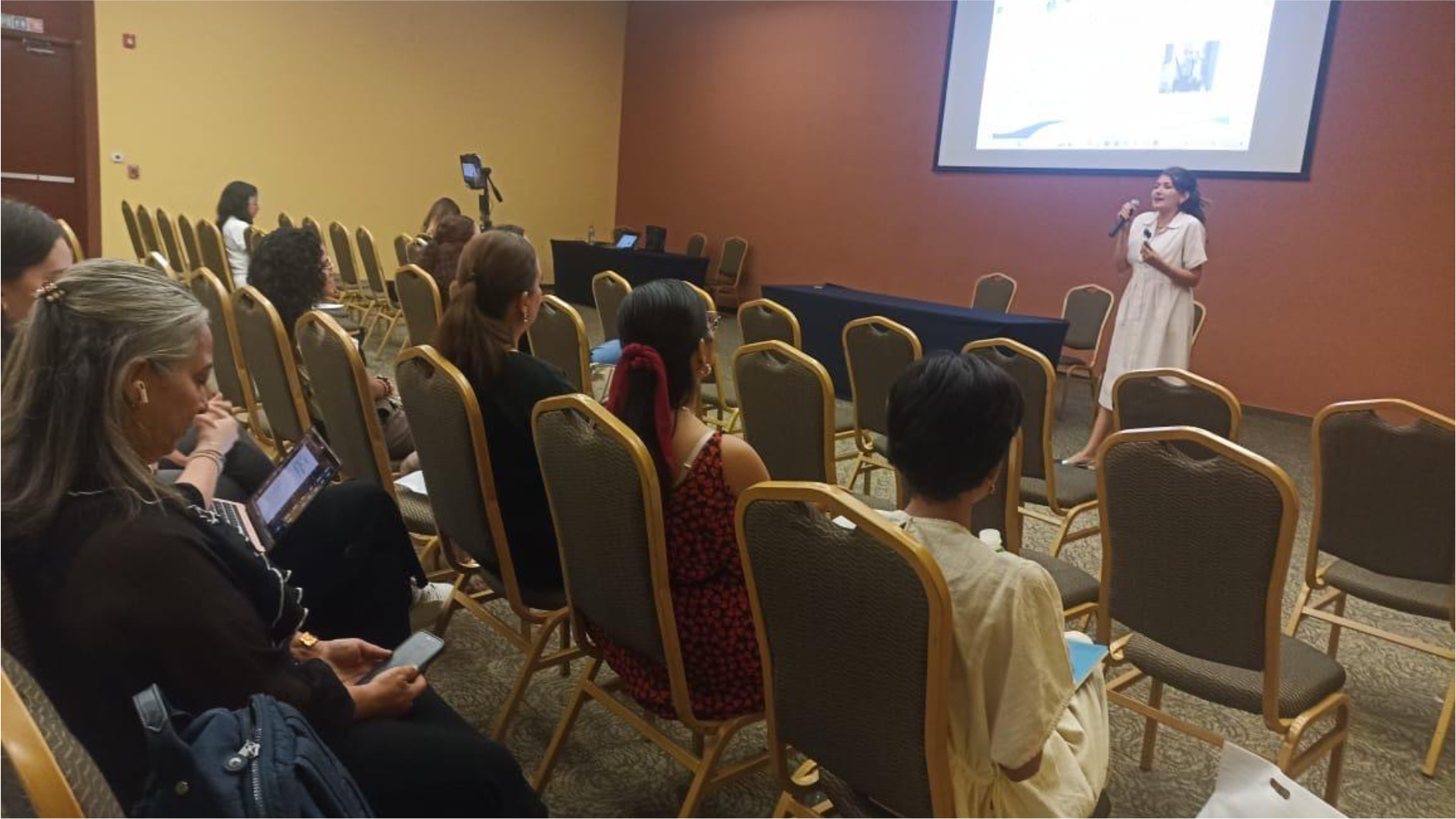
She has participated as a speaker and collaborator in institutions and academic spaces such as Columbia University in New York, Anáhuac University Querétaro, the Autonomous University of Querétaro, and the Monterrey Institute of Technology and Higher Education, Querétaro Campus, among others.
Trauma, Neurodiversity, and the Prevention of Child Sexual Abuse
In 2023, during a specialized trauma therapy process, Elisa incorporated memories related to child sexual abuse (CSA) into her personal history. This experience deepened a line of work that is now part of her awareness-raising and training efforts: the relationship between early trauma, neurodevelopment, neurodiversity, and mental health in adulthood. From an ethical and evidence-based perspective, she develops conferences and awareness programs focused on the prevention of child sexual abuse, particularly considering the conditions that can increase the vulnerability of neurodivergent children and individuals.
Her personal experience is not the focus of her work, but rather the starting point for a professional approach that integrates scientific knowledge, psychoeducation, lived experience, and a human rights perspective. Inclusion, employability, and human development. She currently develops specialized mentorships, university awareness programs, and training projects aimed at strengthening the retention, well-being, and employability of neurodivergent students and professionals.
Her main lines of work include:
* Evidence-based university educational inclusion.
* Teacher training and neuroeducation.
* Neurodivergent employability and workplace inclusion.
* Certification and business training in neurodiversity.
* Timely diagnosis with a gender perspective.
* Prevention of child sexual abuse and its relationship to neurodiversity.
* Complex trauma and mental health.
* Human development from genetic and epigenetic perspectives.
Art, communication, and social innovation
Communication and art are integral to her understanding and expression of the human experience. Through her artistic work, she explores themes related to memory, identity, emotions, trauma, resilience, and the human condition.
Her artwork can be seen at @ElisaFarias.art
This led her to settle in San Miguel de Allende, Guanajuato, in July 2026, where she promotes new initiatives for inclusion, culture, and social participation. One of her main dreams is to contribute to the creation of a Social Innovation Hub, a space that connects talent, businesses, organizations, academia, art, and the community to develop innovative solutions to social challenges, particularly in the areas of inclusion and neurodiversity. She participated in the first GEMA festival in August 2026, organized by CANIRAC, where she gave a lecture and presented an exhibition on inclusive art and culture with a focus on neurodiversity.
For Elisa, inclusion is not just about recognizing that we are different, but about transforming environments so that those differences can exist, participate, and flourish.
Collaboration
Victor Pereira Sánchez – Fundación Alicia Koplowitz
Neuroeducacion – Red TDAH
I CONGRESO INTERNACIONAL EMPLEABILIDAD Y NEURODIVERSIDAD

Podcast

Share event
Available on aspika.tv

