PODCAST
NeuroUniversos

Autismo ¿Inclusión real o solo palabras?
Languaje: Spanish
In this special episode of the NeuroUniverses Podcast, host Julian Pico speaks with Dr. Abraham Ros, psychologist, speaker, and international activist within the autism spectrum, about a profoundly human story titled “Asperger’s and My Self.”
Dr. Abraham Ros shares his personal journey as a person with Autism Spectrum Disorder, revealing what it was like growing up feeling different in a world that often doesn’t understand autism. His life changed radically when he received his diagnosis as an adult, at 32 or 33 years old, at which point he began a process of understanding, acceptance, and personal transformation.
During this intimate conversation, Abraham opens his heart to talk about:
• What it was like to live much of his life without knowing he was autistic
• The emotional and psychological impact of receiving the diagnosis in adulthood
• The challenges of communication, identity, and social integration
• His professional path as a psychologist and autism advocate
• His experience as a husband and father while being autistic
• And the mission that guides his life today: breaking down stigmas and giving a voice to the autistic community
Currently, Abraham Ros dedicates his work to advocating for the rights of people with autism, offering lectures, workshops, and training programs to help families, professionals, and society better understand what it’s like to live with autism.
This episode is more than an interview.
It’s a journey of identity, acceptance, and humanity that invites us to understand that autism is not a limitation, but a different way of experiencing the world.
An essential episode for parents, professionals, educators, and anyone who wants to understand autism from the perspective of someone who lives it.
Host: Julian Pico
Guest: Dr. Abraham Ros
Podcast: NeuroUniversos | ASPIKA Global Platform

Episode 1
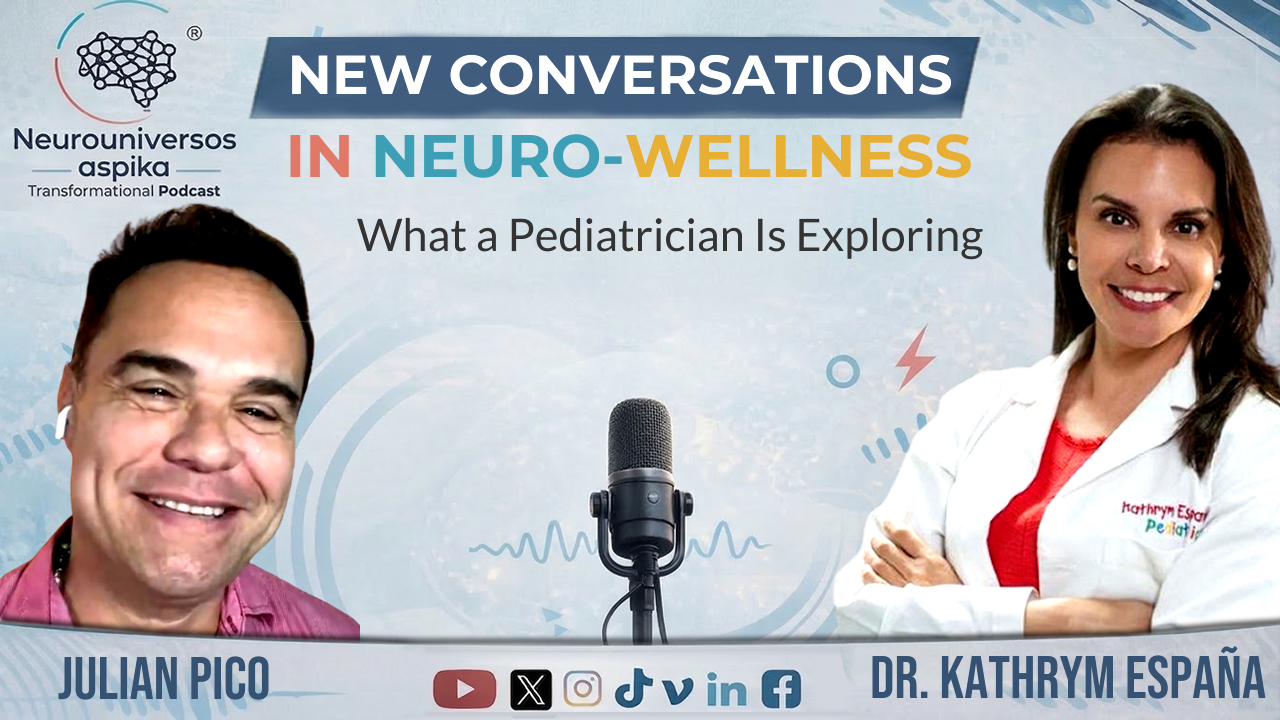
New Conversations in Neuro-Wellness - What a Pediatrician Is Exploring
Languaje: English
This was not simply a pediatric interview. This was a conversation about where medicine, innovation, parental advocacy, and responsible curiosity intersect.
Dr. España brings more than clinical credentials—she brings the perspective of a physician who intentionally stepped outside traditional high-volume medical systems to create a model centered on time, listening, empathy, and individualized care. That alone resonates powerfully with today’s families navigating neurodevelopmental complexity.
The second—and strategically provocative—layer of this episode is the exploration of emerging non-invasive photobiomodulation / light-based wellness technologies.
From a medical positioning standpoint:
The nervous system is highly responsive to environmental stimuli, including light.
Research in photobiomodulation has explored possible roles in:
cellular energy support (mitochondrial activity)
inflammation modulation
circulation support
nervous system regulation
pain and recovery applications
However, autism-specific evidence remains preliminary and not established as standard clinical care.
That distinction matters enormously.
This episode succeeds because it does NOT promise treatment.
It presents a responsible exploration of innovation.
Host: Julian Pico
Guest: Dr Kathrym España
Podcast: NeuroUniversos | ASPIKA Global Platform
Episode 2
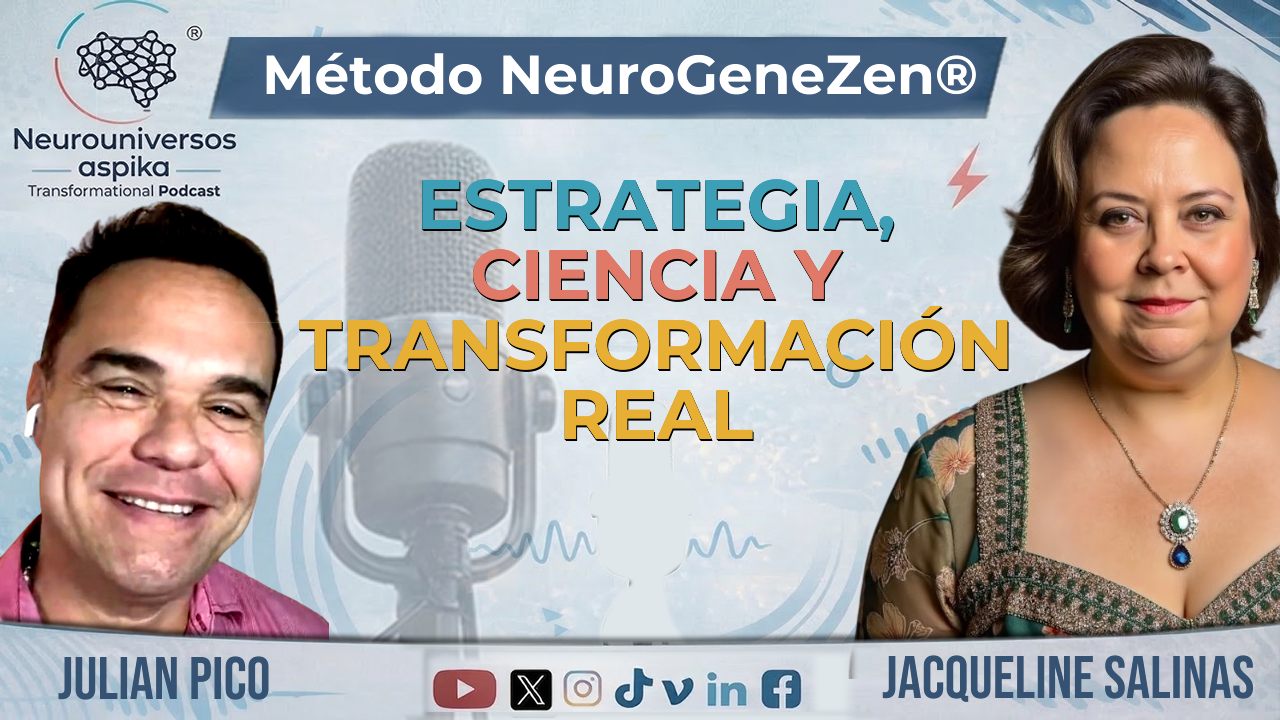
NeuroGeneZen® Method: Strategy, Science, and Real Transformation
Languaje: Spanish
A conversation that reveals the purpose behind those transforming family neurodevelopment across Latin America.
In this special edition of NEUROUNIVERSOS by ASPIKA, we open a space for deep, strategic, and human dialogue alongside Carmen Ramírez and M.Sc. Jacqueline Salinas—two professionals deeply committed to advancing neurodevelopment, neuroeducation, and family transformation through an applied and highly conscious approach.
What drives those who dedicate their lives to supporting neurodivergent families?
What experiences, lessons, and convictions led them to develop methodologies that are now impacting homes, children, and life trajectories?
In this conversation, we explore not only their personal journeys, but also the vision behind the work they do and the applied methodologies that distinguish their impact.
From the innovative NeuroGeneZen® Method, to strategies centered on neurodevelopment, nervous system regulation, family guidance, and strengthening functional autonomy, this episode delivers a high-value conversation for those seeking a deeper understanding of the emerging dialogues shaping the future of neurodivergent support.
A special edition designed for:
✔ Families
✔ Educators
✔ Physicians
✔ Therapists
✔ Neurodevelopment Professionals
✔ Leaders committed to inclusion and human evolution
NEUROUNIVERSOS by ASPIKA
Where the conversations that matter find a global platform.
Coming soon on ASPIKA TV.
Host: Julian Pico
Guest: Jacqueline Salinas y Carmen Ramirez
Podcast: NeuroUniversos | ASPIKA Global Platform
Episode 3
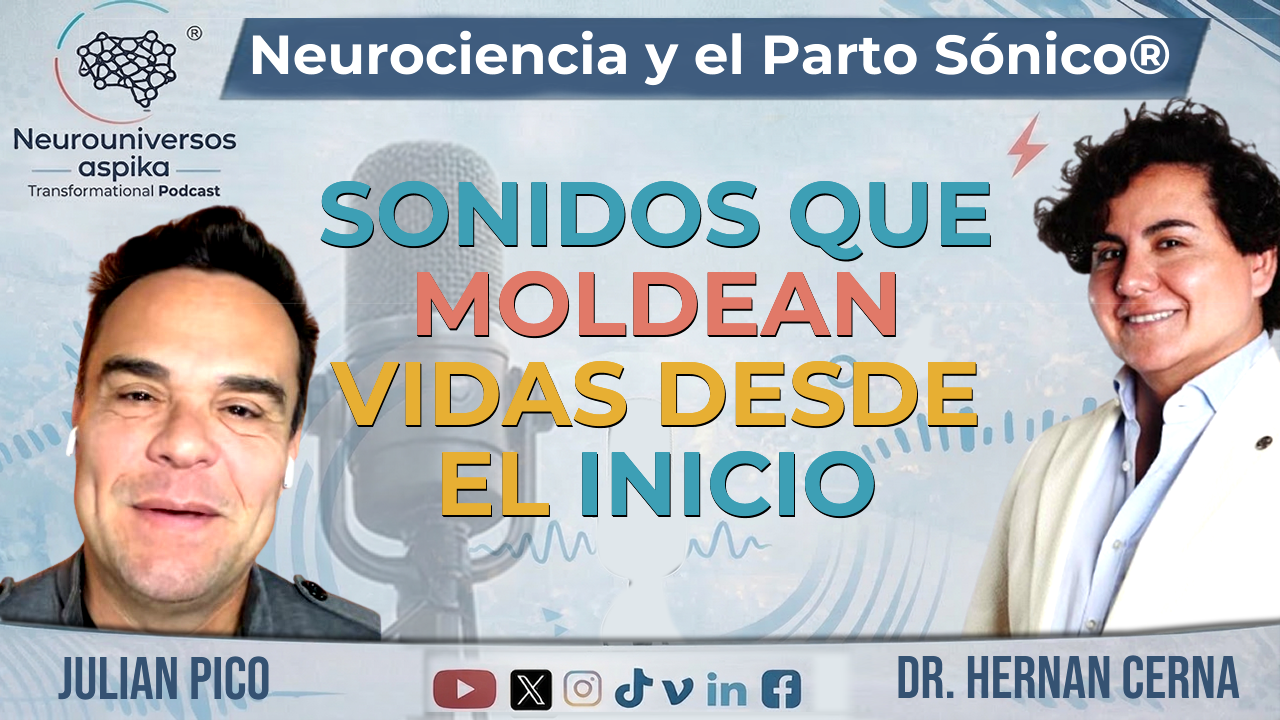
Neuroscience and Sonic Birth®: Sounds that shape lives from the beginning
Languaje: Spanish
A conversation that reveals the purpose behind those transforming family neurodevelopment across Latin America.
In this special edition of NEUROUNIVERSOS by ASPIKA, we open a space for deep, strategic, and human dialogue alongside Carmen Ramírez and M.Sc. Jacqueline Salinas—two professionals deeply committed to advancing neurodevelopment, neuroeducation, and family transformation through an applied and highly conscious approach.
What drives those who dedicate their lives to supporting neurodivergent families?
What experiences, lessons, and convictions led them to develop methodologies that are now impacting homes, children, and life trajectories?
In this conversation, we explore not only their personal journeys, but also the vision behind the work they do and the applied methodologies that distinguish their impact.
From the innovative NeuroGeneZen® Method, to strategies centered on neurodevelopment, nervous system regulation, family guidance, and strengthening functional autonomy, this episode delivers a high-value conversation for those seeking a deeper understanding of the emerging dialogues shaping the future of neurodivergent support.
A special edition designed for:
✔ Families
✔ Educators
✔ Physicians
✔ Therapists
✔ Neurodevelopment Professionals
✔ Leaders committed to inclusion and human evolution
NEUROUNIVERSOS by ASPIKA
Where the conversations that matter find a global platform.
Coming soon on ASPIKA TV.
Host: Julian Pico
Guest: Hernan Cerna
Podcast: NeuroUniversos | ASPIKA Global Platform
Episode 4
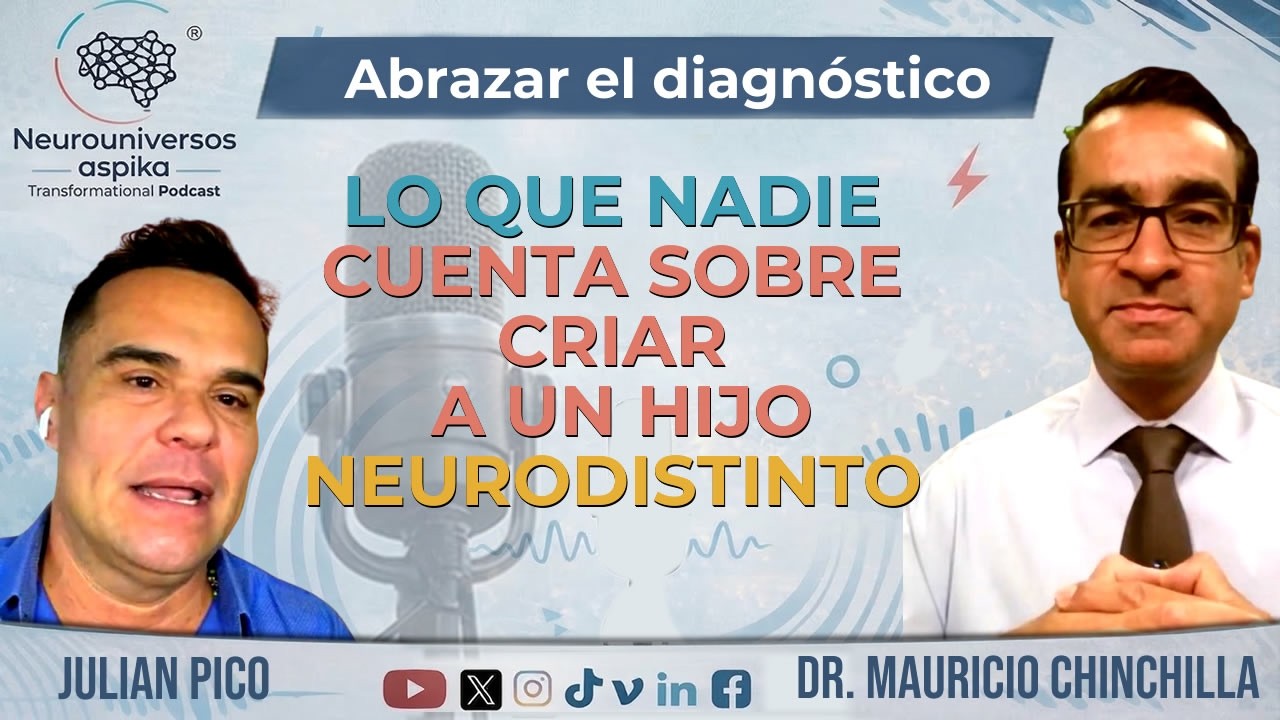
What no one tells you about raising a neurodifferent child
Languaje: Spanish
What if autism isn’t just what you’ve been told? In this shocking excerpt, a renowned neurologist breaks the silence and reveals the alarming connection between the global neurodivergence crisis, industrial pollution, and ultra-processed foods that are destroying our children’s gut microbiota. If you’re a parent or therapist, you need to open your eyes to the hidden dangers that worsen behavioral crises and discover the true biological path to relief. Don’t blindly follow internet recipes; human science and real nutrition have the answer that no one on social media is telling you. Watch it before it’s too late!
Host: Julián Pico
Guest: Dr. Mauricio Chinchilla
Podcast: NeuroUniversos | Plataforma Global ASPIKA
Episode 5
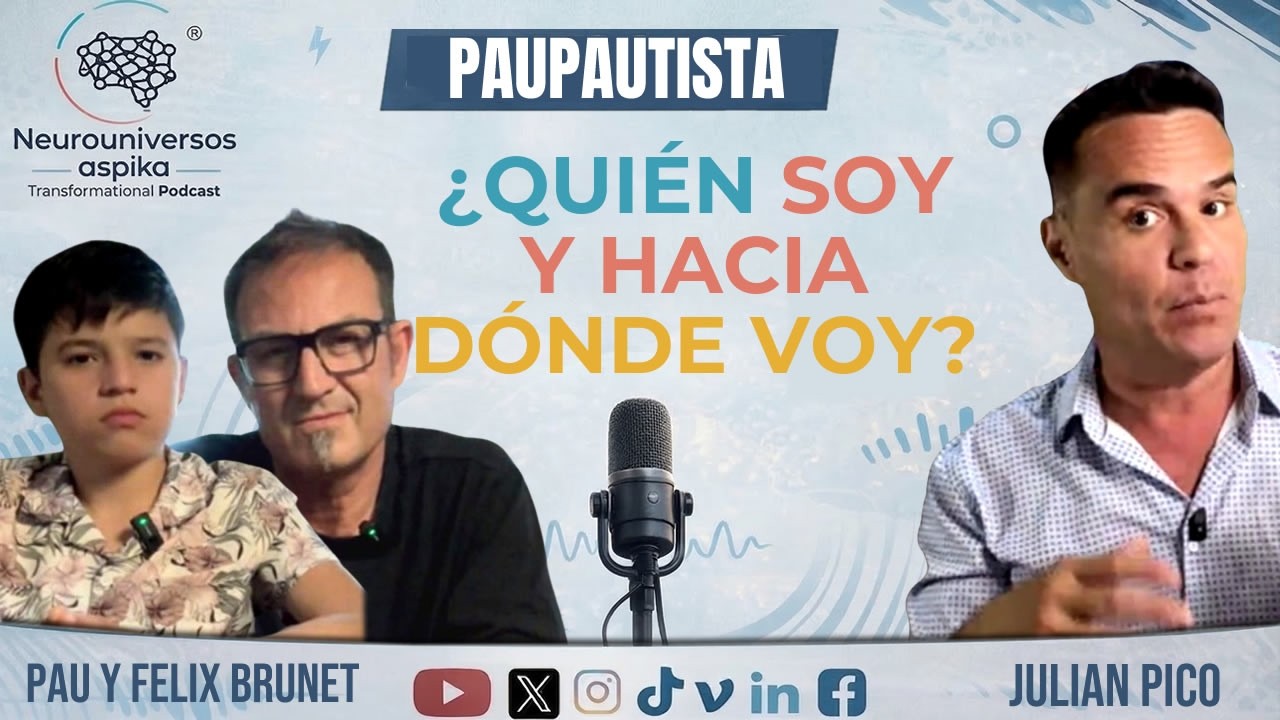
¿Quién soy y hacia dónde voy?
Languaje: Spanish
There are conversations that inspire us. And there are others that transform us.
In this new episode of ASPIKA NeuroUniverses, we explore a new chapter in the life of Pau Brunet (@PauPautista), the young Spanish communicator who has captivated thousands of families by sharing, with authenticity and sensitivity, his experience of living with autism. Accompanied by his father, Félix, they invite us on a journey of self-discovery, growth, and a vision for the future.
Far from stereotypes, we find a bright, mature, reflective, and determined Pau, with an inspiring perspective on the challenges, opportunities, and dreams that drive his life today. Together with Félix, they share how they have evolved as a family, the new projects they are developing, and the impact they wish to continue making for thousands of people around the world.
This episode is a powerful conversation about the importance of believing in the potential of every person, breaking down barriers, and understanding that the future of neurodiversity is built by listening to the voices of those who live it every day.
Because when a family decides to transform its story into a mission, it inspires an entire generation.
Don’t miss this new episode of ASPIKA NeuroUniverses. A conversation that opens doors, changes perspectives, and reminds us that the future belongs to those who dare to build it.
Host: Julián Pico
Guest: Pau y Felix Brunet
Podcast: NeuroUniversos | Plataforma Global ASPIKA
Episode 6
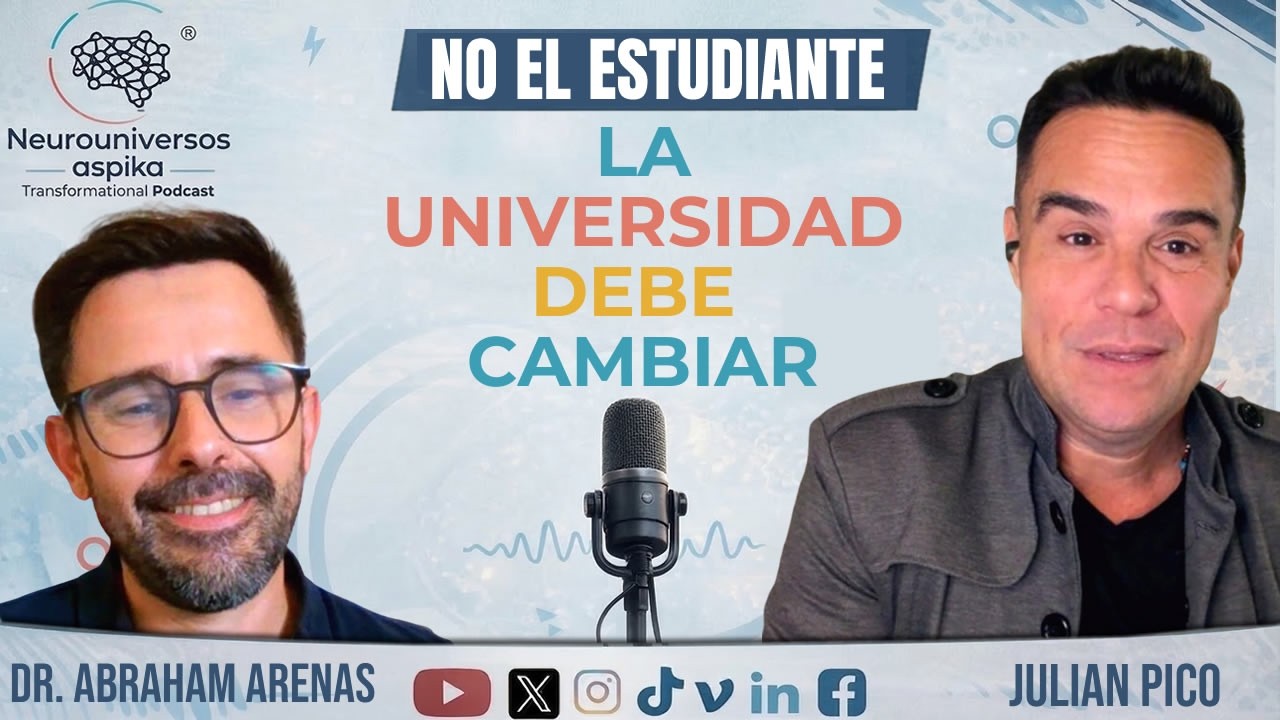
Transforming Higher Education for a New Neurodiverse Generation
Languaje: Spanish
In this extraordinary episode of NeuroUniverses, Julián Pico speaks with Dr. Abraham Arenas, a leading specialist in higher education and an international authority on educational innovation, about one of the greatest challenges of our time: transforming education to meet the needs of a new generation of neurodiverse students.
Throughout this powerful conversation, Dr. Arenas explains why the traditional educational model no longer reflects the reality of thousands of young people who differ in how they learn, process information, communicate, and develop their potential. Rather than adapting students to the system, he argues for the need to transform educational institutions to create environments where everyone has the opportunity to learn, grow, and succeed.
Julián Pico guides an in-depth discussion about the changes universities must begin implementing to meet the challenges of the 21st century. From more flexible teaching methodologies to assessment strategies, technology, accessibility, and academic support, the episode presents a modern vision of education centered on the individual, not just the curriculum.
Dr. Arenas also shares how universities have a responsibility to prepare neurodiverse young people not only to obtain a degree, but also to develop the skills necessary to successfully integrate into the professional world, exercise leadership, and contribute their talents to society.
One of the most powerful messages of the episode is that true educational inclusion begins when we stop asking how to change the student and start asking how to transform the education system. Neurodiversity does not represent a limitation to academic excellence; it represents an opportunity to build more innovative, humane, and future-proof educational models.
This episode invites universities, educators, families, and policymakers to rethink the future of higher education. Educational innovation is no longer an option: it is a necessity to train professionals capable of thriving in an increasingly diverse, technological, and global world.
This is an essential conversation to understand why the future of education will depend on our ability to recognize, value, and empower different ways of learning.
Host: Julián Pico
Guest: Dr. Abraham Arenas
Podcast: NeuroUniversos | Plataforma Global ASPIKA
Episode 7
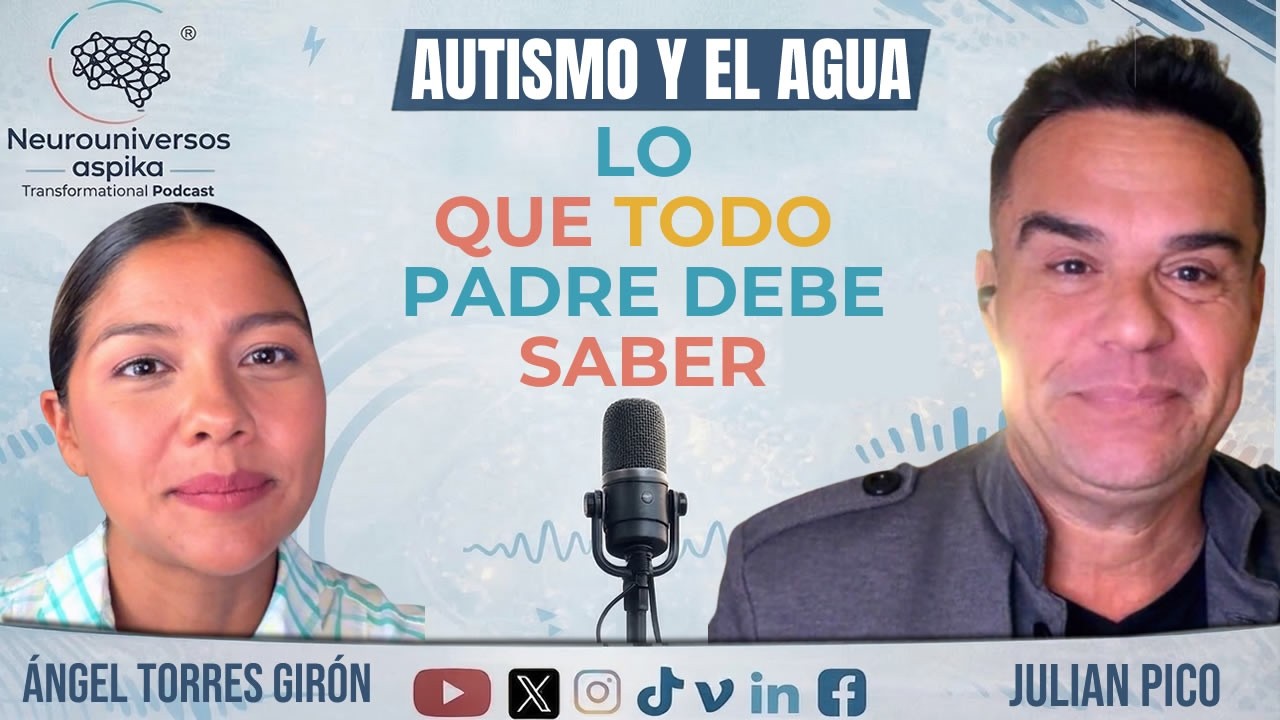
Aquatic Safety: The Transformative Power of Swimming
Languaje: Spanish
In this important episode of NeuroUniverses, Julián Pico speaks with Ángel Torres Girón, a specialist in swimming and water safety for neurodiverse children, about one of the most important topics for families: water safety.
Throughout the interview, Ángel shares what motivated her to dedicate her life to teaching children on the autism spectrum and with other neurodevelopmental conditions, explaining how swimming goes far beyond learning a sporting skill. Aquatic education represents a tool for protection, development, confidence, and independence that can make a significant difference in the life of a child and their family.
Julián and Ángel delve into the importance of parents understanding the close relationship many autistic children have with water. For many of them, the aquatic environment offers a unique sensory experience that can be calming, pleasurable, and highly regulating. However, this same attraction makes constant supervision and early instruction in water safety essential. The conversation also addresses how swimming can contribute to the development of motor coordination, sensory regulation, confidence, communication, and autonomy, always respecting each child’s individual needs and using teaching strategies adapted to their learning style.
One of the central messages of this episode is that water safety should not be considered an optional activity, but a priority for all families with neurodiverse children. Learning to be comfortable in the water can reduce risks, strengthen life skills, and offer new opportunities for physical, emotional, and social growth.
This episode invites parents, caregivers, and professionals to understand that teaching water safety is an investment in each child’s life, well-being, and future. With the right support, patience, and specialized instruction, water can become a space for learning, confidence, enjoyment, and holistic development.
Host: Julián Pico
Guest: Ángel Torres Girón
Podcast: NeuroUniversos | Plataforma Global ASPIKA
Episode 8
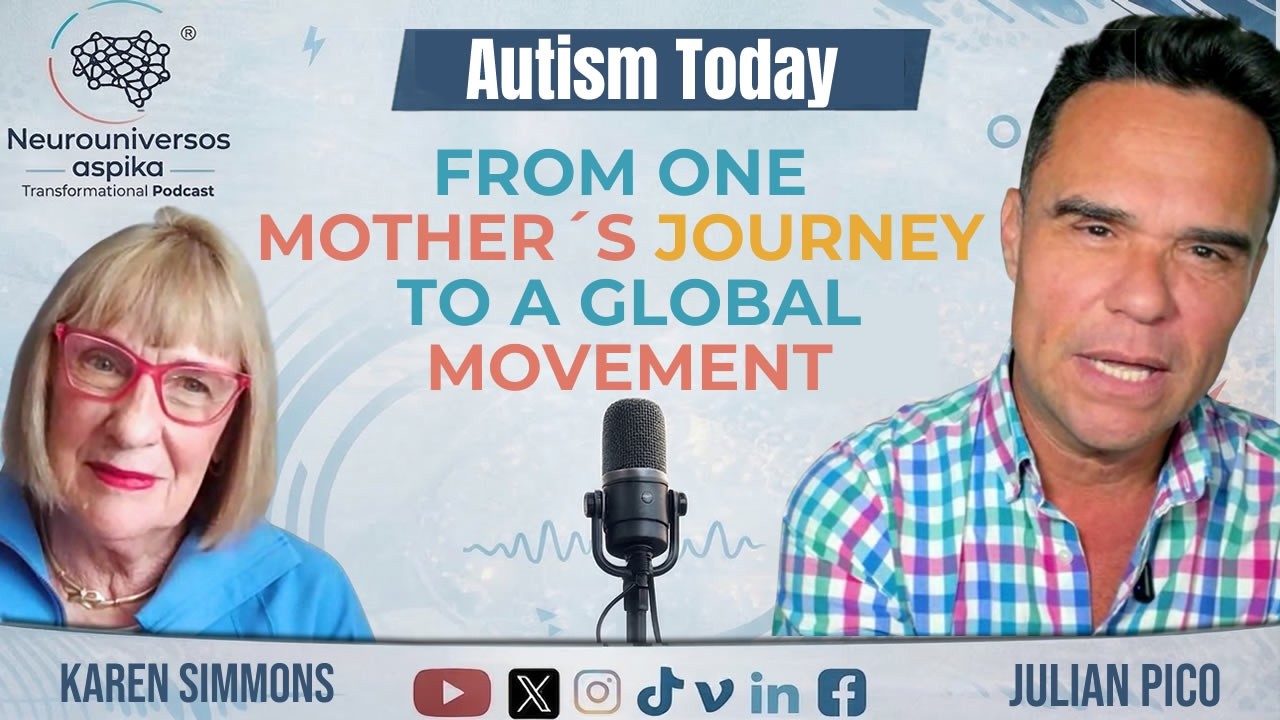
From One Mother's Journey to a Global Legacy
Languaje: English
In this inspiring episode of NeuroUniversos, host Julián Pico sits down with internationally recognized autism advocate Karen Simmons, Founder of Autism Today, to reflect on one of the most influential journeys in the global autism movement.
Karen takes us back to where it all began—the deeply personal experiences that inspired her to create Autism Today. What started as a mother’s determination to better understand and support her own child evolved into a worldwide organization that has educated, empowered, and connected millions of families, professionals, educators, and self-advocates.
Throughout the conversation, Karen openly shares the challenges she faced as a parent, the lessons learned along the way, and the importance of building communities that embrace understanding, compassion, and opportunity. Her story is a powerful reminder that meaningful change often begins with a single family determined to make a difference.
Julián also explores the evolution of Autism Today, discussing how the organization has grown over the years and the exciting vision that lies ahead. Karen shares her current mission, the next steps for Autism Today, and her continued commitment to creating resources, fostering collaboration, and improving the lives of autistic individuals and their families around the world.
More than a conversation about autism, this episode is about leadership, perseverance, purpose, and the lasting impact one person can have on an entire global community.
Join us for an inspiring discussion that celebrates the past, embraces the present, and looks toward a future filled with greater awareness, innovation, and hope.
Host: Julián Pico
Guest: Karen Simmons
Podcast: NeuroUniversos | Plataforma Global ASPIKA
Episode 9
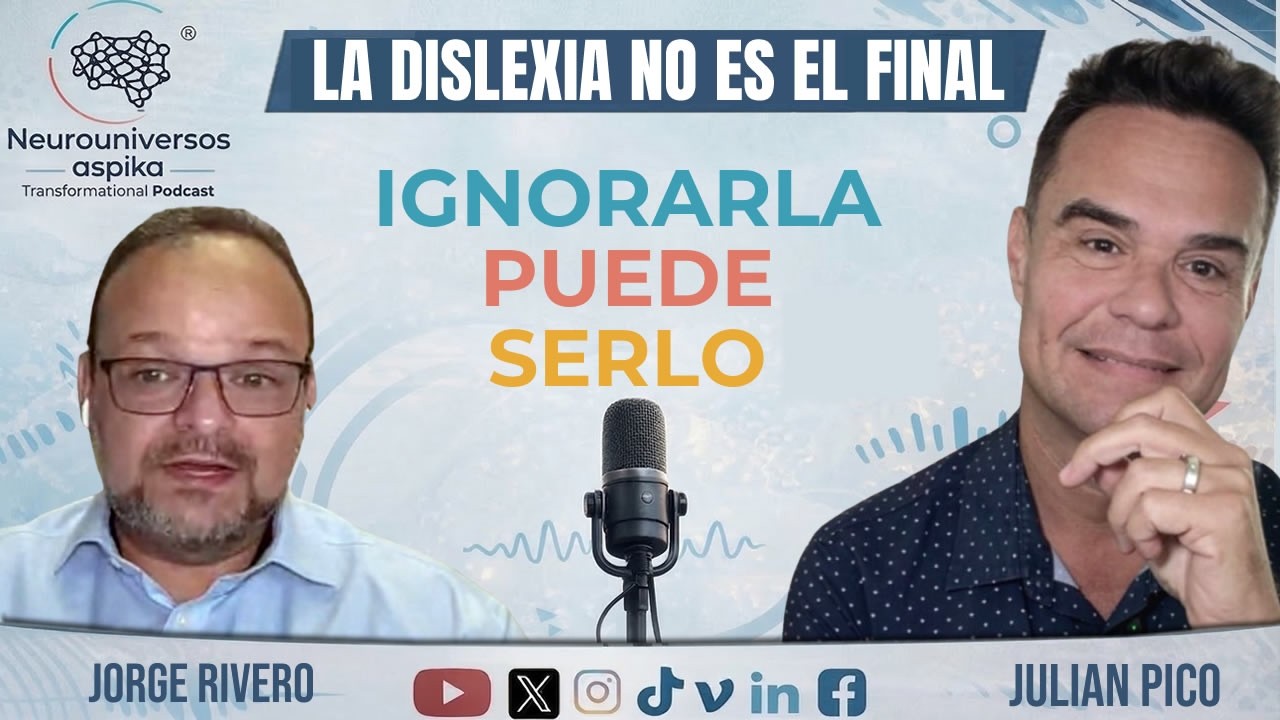
Dyslexia is not the end - ignoring it can be.
Languaje: Spanish
In this inspiring episode of NeuroUniverses, Julián Pico speaks with renowned Venezuelan writer Jorge Rivero, author of the book Gabriel, a Dyslexic Child, a work born from experience, sensitivity, and a deep desire to transform how we understand dyslexia.
Throughout the interview, Jorge shares the significant challenges he faced during his childhood: learning difficulties, bullying, misunderstanding, the impact on his self-esteem, and the barriers that shaped his personal and academic development. His story reflects the reality experienced by thousands of children and young people whose learning differences are often mistaken for a lack of ability, disinterest, or laziness.
The episode delves into how an environment that doesn’t understand dyslexia can affect a person’s confidence, emotional well-being, and future. At the same time, it offers a powerful message of hope: with understanding, support, and the right strategies, a person with dyslexia can reach their full potential and achieve a fulfilling and productive life. Jorge Rivero also shares important recommendations for parents, family members, and educators, emphasizing the need to observe, listen, and act promptly when a child shows signs of learning difficulties. Recognizing these differences from an early age can change the course of a life.
One of the most significant messages of this conversation is that a dyslexia diagnosis does not represent the end of a journey; it represents the beginning of a new opportunity to understand, support, and enhance the strengths of each child or adult. Early detection opens the door to timely interventions, greater self-esteem, better educational opportunities, and a future with greater possibilities.
Don’t ignore the signs. Don’t ignore your children. Behind every child with dyslexia lies enormous potential waiting to be discovered when they receive the right support.
This profoundly human conversation invites us to change the way we understand dyslexia and reminds us that, when a difference is recognized and supported with love and knowledge, it can become one of a person’s greatest strengths.
Host: Julián Pico
Guest: Jorge Rivero
Podcast: NeuroUniversos | Plataforma Global ASPIKA
Episode 10
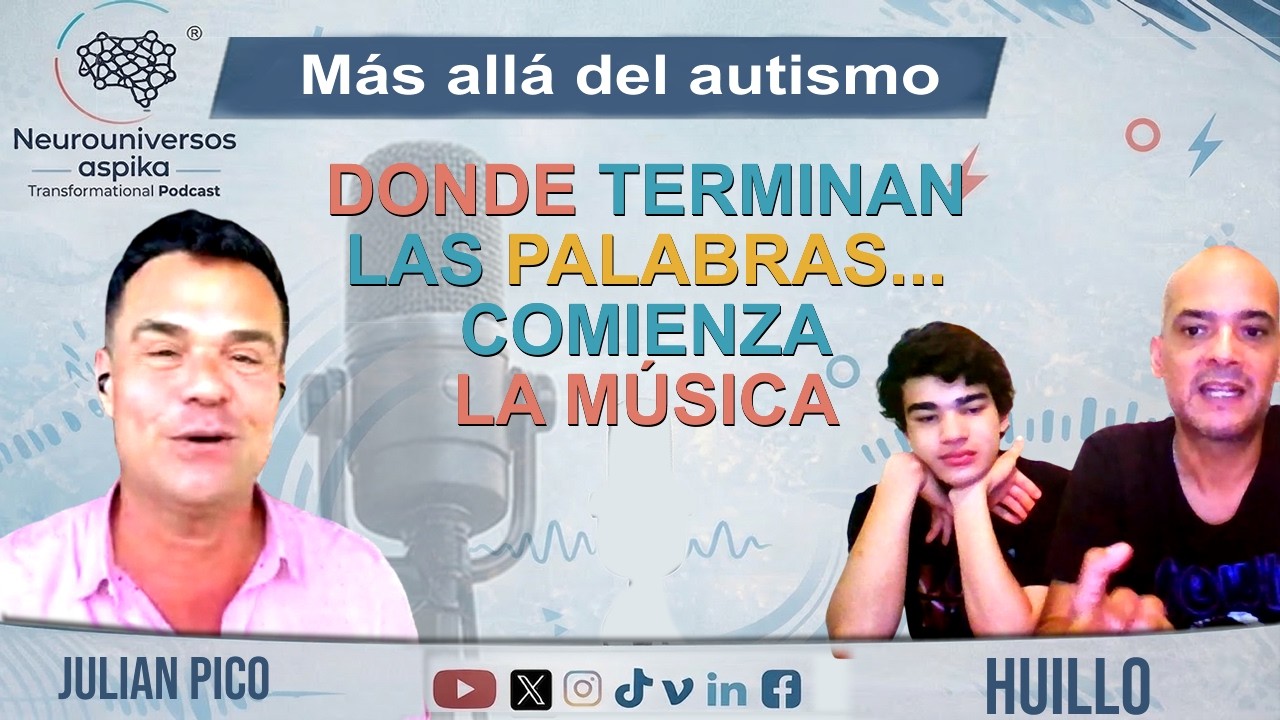
Where words end... music begins.
Languaje: Spanish
Millions of people met Huillo when a video shocked the world. An autistic child who, through tears, intensely lived Coldplay’s music. Years later, what seemed like an impossible dream became a reality: Chris Martin invited him on stage to perform his own song, “Different Is OK”, in front of thousands of people, turning his story into a global symbol of hope, talent and inclusion.
But this episode isn’t about Coldplay.
It’s about what happened next.
In one of the most emotional conversations in NeuroUniversos, Julián Pico talks with Huillo and his father, Luis Vázquez, about a stage that is rarely talked about: the transition to adulthood of an autistic person.
What happens when the stage lights go out?
What happens when the applause ends and the construction of a life project begins?
Today, Huillo continues to develop his extraordinary musical talent and has taken a new step on his path by entering a music school, proving that dreams do not end with a viral moment; they are just beginning.
Throughout the episode, father and son share with enormous honesty the hopes, challenges and questions that thousands of families around the world face. They talk about independence, education, employment, purpose, identity and the importance of building real opportunities so that neurodivergent young people can realize their full potential.
One of the most moving moments comes when Luis speaks, not only as a father, but as any father who looks to the future with hope. Because the biggest dream was not to see Huillo on stage with one of the most important bands in the world.
The true dream has always been to see him build a full, happy, independent and meaningful life.
This episode reminds us that inclusion doesn’t end with an inspiring moment or a standing ovation. True inclusion begins when society creates paths so that each person can continue growing, studying, working, creating and dreaming throughout their lives.
Because great moments inspire.
But it is opportunities that transform the future.
Host: Julián Pico
Guest: Huillo
Podcast: NeuroUniversos | Plataforma Global ASPIKA
Episode 11
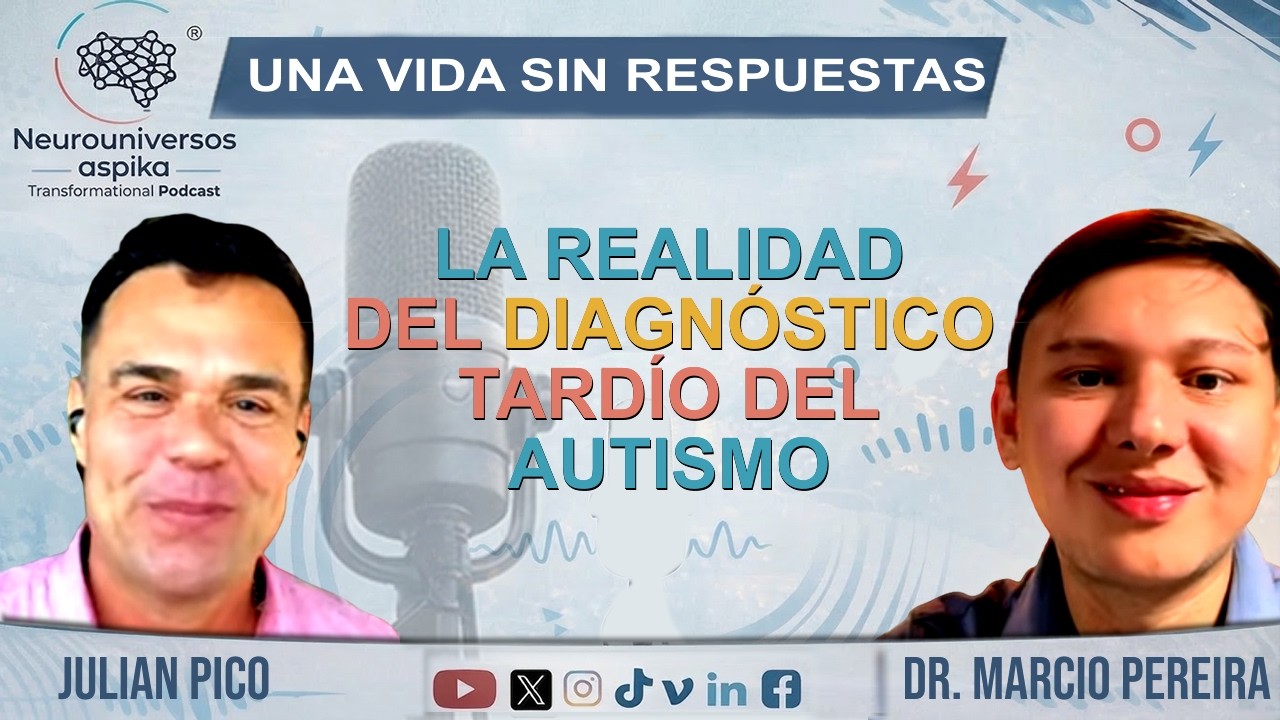
A Life Without Answers – The Reality of a Late Autism Diagnosis
Languaje: Spanish
In this extraordinary episode of *NeuroUniversos*, Julián Pico speaks with renowned Brazilian psychiatrist Dr. Márcio Pereira—one of Brazil’s most respected and influential medical voices regarding autism, neurodivergence, and mental health—about a reality that continues to silently affect millions of people worldwide: the undiagnosed population.
For decades, countless children grew up without answers. They became adolescents and later adults feeling different, unable to understand why the world seemed to demand they adapt to structures never designed for their way of thinking, learning, communicating, or experiencing life.
In this profound conversation, Dr. Pereira explains how a lack of awareness, limited access to specialists, and a scarcity of resources have resulted in millions of people living much of their lives without understanding their own neurological makeup.
It is a reality that impacts not only those who remain undiagnosed but also their families, communities, and healthcare systems.
One of the most powerful messages of this episode is that a diagnosis does not define who you are. It does not determine your intelligence, your capabilities, your dreams, or the value you bring to the world. Every human being is unique. Every story is different. Every person possesses talents, strengths, and challenges that transcend any clinical label.
A diagnosis does not change your identity; it simply offers an explanation. It provides a language to understand how your brain works, grants access to appropriate support when needed, and helps replace years of uncertainty, guilt, and misunderstanding with knowledge, acceptance, and hope.
Julián Pico and Dr. Pereira also examine how the growing recognition of neurodivergence in adulthood is transforming our understanding of human development. More and more people are discovering that what was interpreted for years as anxiety, shyness, disorganization, or social difficulties was, in fact, a different way of perceiving and processing the world. This episode is a call to doctors, health professionals, educators, families, and policymakers to strengthen access to early diagnosis, promote training based on scientific evidence, and build a society where every person has the opportunity to be understood, respected, and supported.
Because the true goal has never been to change people.
The true goal is to understand them.
Because a diagnosis does not define who you are.
But understanding you can change your life.
Host: Julián Pico
Guest: Dr. Marcio Pereira
Podcast: NeuroUniversos | Plataforma Global ASPIKA
Episode 12
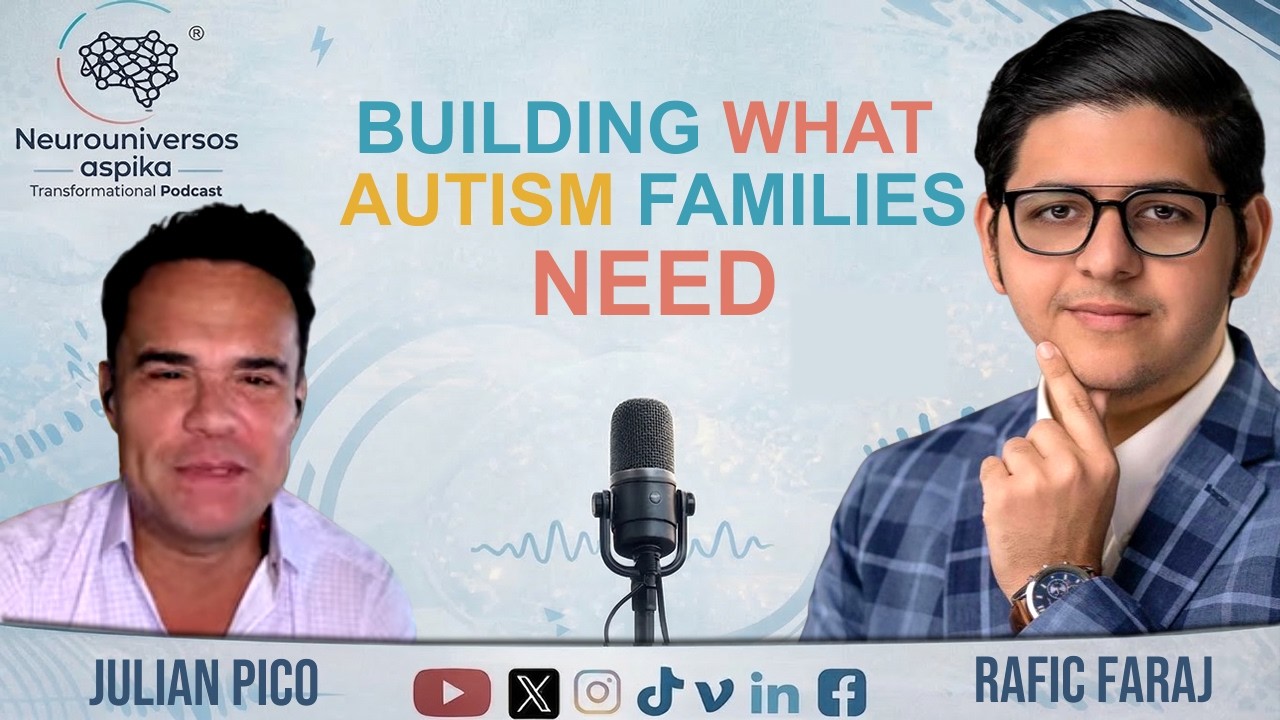
BUILDING WHAT AUTISM FAMILIES NEED
Languaje: English
In this episode of NeuroUniversos Podcast, host Julián Pico Jr. sits down with entrepreneur and community builder Rafic Faraj for a conversation about vision, structure, and a growing commitment to creating meaningful support for autism families.
Throughout the conversation, Julián takes Rafic through the roadmap behind Kinetic Kickoff — from its beginnings in Miami-Dade to the larger vision of expanding a model designed around what families actually experience and need.
Rafic shares how Kinetic Kickoff is bringing together sensory-friendly and accessible events, bilingual resources, family education, workshops, community partnerships, and practical support, while creating environments intentionally designed with autistic children and their families in mind.
But the conversation goes beyond programs and events.
Julián explores the thinking behind the organization: How do we build stronger structures around families? How do we connect resources that too often operate separately? And how can communities, institutions and businesses become part of creating lasting change?
Rafic also discusses the entrepreneurial side of his journey and his work with Fastxo, revealing how business development and social impact can strengthen one another when both are built with purpose.
At the heart of the episode are three principles that guide Rafic’s work: structure, systems and connection.
Together, Julián and Rafic explore a roadmap that begins with listening to families, grows through collaboration and community, and ultimately asks a bigger question:
What becomes possible when we stop asking families to navigate everything alone — and begin building what they actually need?
A conversation about autism, family, entrepreneurship, community and the power of turning purpose into action.
Host: Julián Pico
Guest: Rafic Faraj
Podcast: NeuroUniversos | Plataforma Global ASPIKA
Episode 13
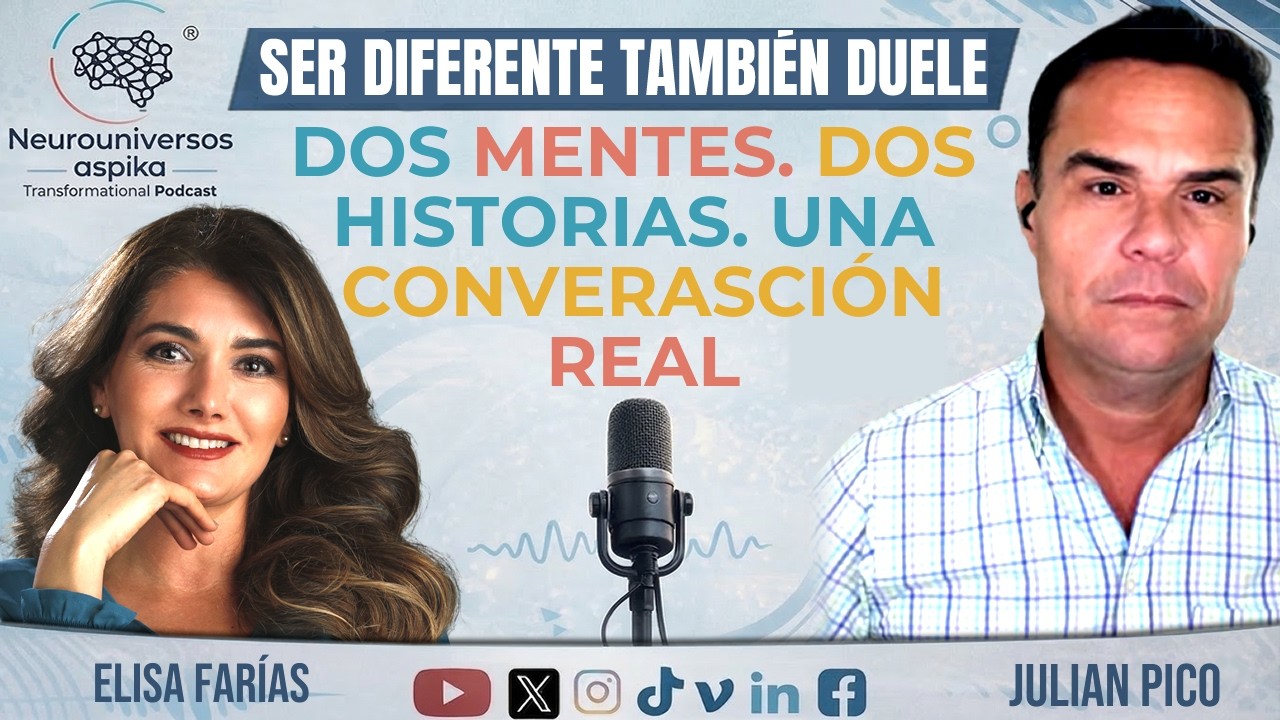
BEING DIFFERENT HURTS TOO – TWO MINDS, TWO STORIES, ONE REAL CONVERSATION
Languaje: Spanish
What happens when you spend part of your life trying to understand why you think, feel, and experience the world differently?
In this new episode of *NeuroUniversos*, Julián Pico Jr. welcomes Elisa Farías—a communicator, speaker, child advocate, and tireless voice for neurodiversity based in Mexico.
But this time, the conversation takes a different path.
Julián doesn’t just interview Elisa; he also reflects alongside her, drawing from his own neurodivergent experience.
Two neurodivergent individuals.
Two completely different stories.
And a deeply honest conversation about what it means to navigate a world that doesn’t always understand the way your mind works.
Elisa opens up about deeply personal chapters of her life: a childhood marked by struggles to fit in, bullying, and abuse; years spent searching for answers; an ADHD diagnosis in her late thirties; and the process of finally beginning to understand her own story from a new perspective.
But Elisa chose to do something with everything she had lived through.
She transformed experience into purpose. Pain into advocacy. And her voice into a tool to pave the way for others.
From Mexico, her work advocating for neurodiversity, children, timely diagnosis, and a more informed society continues to reach families, professionals, and communities.
And that is precisely where Julián takes this conversation to another level.
Not from a place of perfection.
Not from a clinical definition.
But from the human experience of being different.
Because behind every diagnosis, there is a person.
Behind every behavior, there is a story.
And behind many neurodivergent people, there is a question that may have stayed with them for years:
Why is something so difficult for me when it seems so easy for everyone else?
A vulnerable, necessary, and deeply human conversation.
Host: Julián Pico
Guest: Elisa Farías
Podcast: NeuroUniversos | Plataforma Global ASPIKA
Episode 14
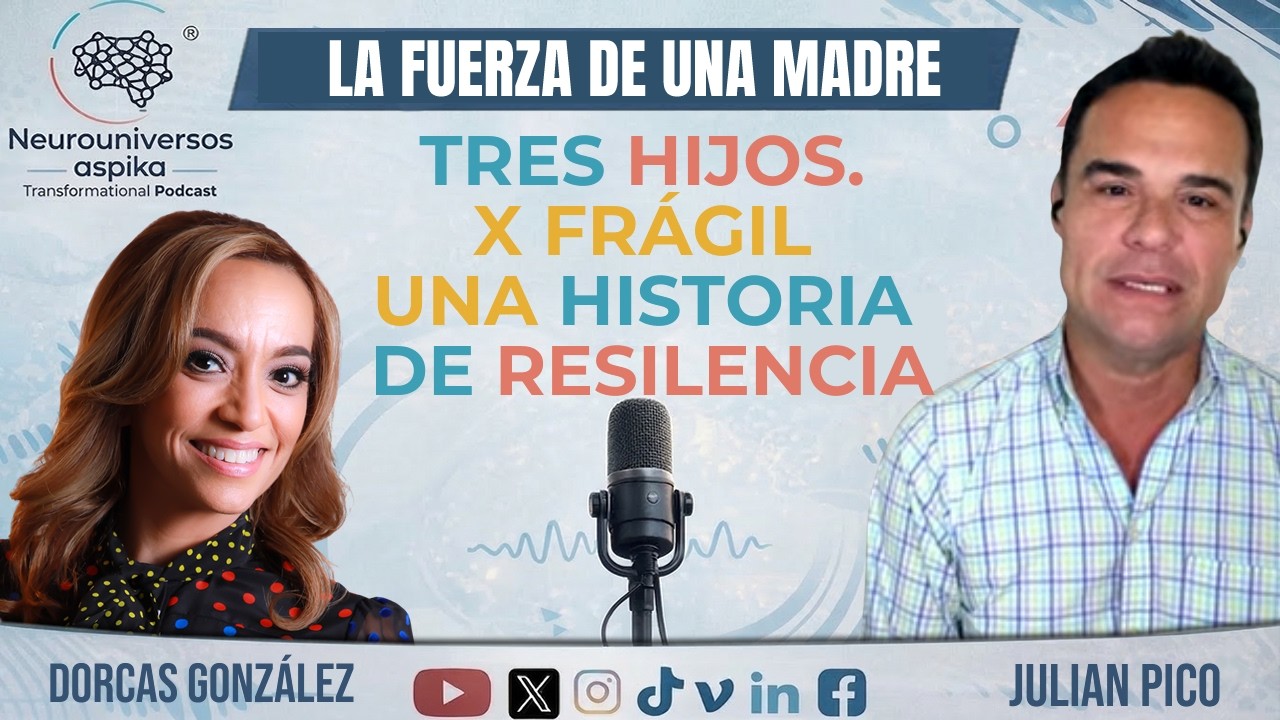
A Mother's Strength – Three children. Fragile X. A story of resilience.
Languaje: Spanish
BEING DIFFERENT HURTS, TOO.
What happens when you spend part of your life trying to understand why you think, feel, and experience the world differently?
In this new episode of *NeuroUniversos*, Julián Pico Jr. welcomes Elisa Farías—a communicator, speaker, child advocate, and tireless voice for neurodiversity based in Mexico.
But this time, the conversation took a different turn.
Julián didn’t just interview Elisa; he also reflects alongside her, drawing from his own neurodivergent experience.
Two neurodivergent individuals.
Two completely different stories.
And a deeply honest conversation about what it means to navigate a world that doesn’t always understand the way your mind works.
Elisa opens up about deeply personal chapters of her life: a childhood marked by struggles to fit in, bullying, and abuse; years spent searching for answers; an ADHD diagnosis in her late thirties; and the process of finally beginning to understand her own story from a new perspective.
But Elisa chose to do something with everything she had lived through.
She transformed experience into purpose. Pain into advocacy. And her voice into a tool to pave the way for others.
From Mexico, her work advocating for neurodiversity, children, timely diagnosis, and a more informed society continues to reach families, professionals, and communities.
And that is precisely where Julián takes this conversation to another level.
Not from a place of perfection.
Not from a clinical definition.
But from the human experience of being different.
Because behind every diagnosis, there is a person.
Behind every behavior, there is a story.
And behind many neurodivergent people, there is a question that may have stayed with them for years:
Why is something that seems so easy for others so difficult for me?
A vulnerable, necessary, and deeply human conversation.
Host: Julián Pico
Guest: Dorcas González
Podcast: NeuroUniversos | Plataforma Global ASPIKA